node2vec is an algorithm to generate vector representations of nodes on a graph. The node2vec framework learns low-dimensional representations for nodes in a graph through the use of random walks through a graph starting at a target node. It is useful for a variety of machine learning applications. node2vec follows the intuition that random walks through a graph can be treated like sentences in a corpus. Each node in a graph is treated like an individual word, and a random walk is treated as a sentence. By feeding these "sentences" into a skip-gram, or by using the continuous bag of words model, paths found by random walks can be treated as sentences, and traditional data-mining techniques for documents can be used. The algorithm generalizes prior work which is based on rigid notions of network neighborhoods, and argues that the added flexibility in exploring neighborhoods is the key to learning richer representations of nodes in graphs. The algorithm is considered one of the best graph classifiers.
Zesta
Zesta is an online food ordering and delivery platform operating across the African region. Formerly known as Square Eats, the company rebranded to Zesta in 2025. Zesta connects customers with restaurants and stores, offering delivery services for food, groceries, parcel delivery and other essentials. == History == Zesta was originally founded as Square Eats in 2020 by twin brothers Henry Newman and Randall Newman when they were 21 years old. It was launched in Gaborone, Botswana, and quickly gained traction as a leading food delivery service in the country. The company halted operations and took a strategic decision to reinvent the business in 2022. In 2025, the company announced its rebranding to Zesta, highlighting its commitment to evolving beyond food delivery to become a super app. === COVID-19 initiative === During the COVID-19 pandemic, Zesta (then Square Eats) implemented measures to ensure safety and hygiene, including providing free gloves and hand sanitizer to drivers and introducing contactless delivery options. These efforts positioned the platform as a trusted service during the pandemic. == Service == Zesta facilitates delivery from a wide range of merchant partners via a smartphone app, available on iOS and Android platforms, or through its website. Customers can browse their favorite restaurants, place orders, and have meals delivered to their doorstep efficiently.
ChromaDB
Chroma or ChromaDB is open-source data infrastructure tailored to applications with large language models. Its headquarters are in San Francisco. In April 2023, it raised 18 million US dollars as seed funding. ChromaDB has been used in academic studies on artificial intelligence, particularly as part of the tech stack for retrieval-augmented generation.
Quantexa
Quantexa is a UK-based software company that develops artificial intelligence-based applications for data analytics and decision-making. The company was founded in 2016 and is headquartered in London, with operations in North America, Europe, and the Asia-Pacific region. As of 2025, Quantexa reported a valuation of $2.6 billion and provides services to organizations in over 70 countries. Investors include Warburg Pincus, HSBC, and the Ontario Teachers’ Pension Plan. == History == Quantexa was founded in London in 2016 by several co-founders, including Jamie Hutton, Richard Seewald, Imam Hoque, Felix Hoddinott, and Vishal Marria, who also serves as the company's chief executive officer. The company was established to develop tools intended to address limitations in traditional data analysis methods, particularly those related to identifying hidden connections across large datasets. The name "Quantexa" is derived from the company's focus on quantitative methods and data analysis. In 2023, Quantexa acquired Dublin-based AI firm Aylien. In April 2023, the company completed a Series E funding round, raising $129 million at a valuation of approximately $1.8 billion, marking its entry into "unicorn" status. In October 2024, the company reported annual recurring revenue (ARR) exceeding $100 million. In early 2025, Quantexa participated in the World Economic Forum's Unicorn Program, which supports high-growth technology companies. In March 2025, Quantexa completed a Series F funding round of $175 million, led by Teachers' Venture Growth, the venture arm of the Ontario Teachers' Pension Plan. That August, the company was reported to be considering a 2026 IPO. The company formed a partnership with Zurich in October 2025, the first insurer to add its AI-based Decision Intelligence platform to enhance fraud detection.
Controlled natural language
Controlled natural languages (CNLs) are subsets of natural languages that are obtained by restricting the grammar and vocabulary in order to reduce or eliminate ambiguity and complexity. Traditionally, controlled languages fall into two major types: those that improve readability for human readers (e.g. non-native speakers), and those that enable reliable automatic semantic analysis of the language. The first type of languages (often called "simplified" or "technical" languages), for example ASD Simplified Technical English, Caterpillar Technical English, IBM's Easy English, are used in the industry to increase the quality of technical documentation, and possibly simplify the semi-automatic translation of the documentation. These languages restrict the writer by general rules such as "Keep sentences short", "Avoid the use of pronouns", "Only use dictionary-approved words", and "Use only the active voice". The second type of languages have a formal syntax and formal semantics, and can be mapped to an existing formal language, such as first-order logic. Thus, those languages can be used as knowledge representation languages, and writing of those languages is supported by fully automatic consistency and redundancy checks, query answering, etc. == Languages == Existing controlled natural languages include: == Encoding == IETF has reserved simple as a BCP 47 variant subtag for simplified versions of languages.
Developmental robotics
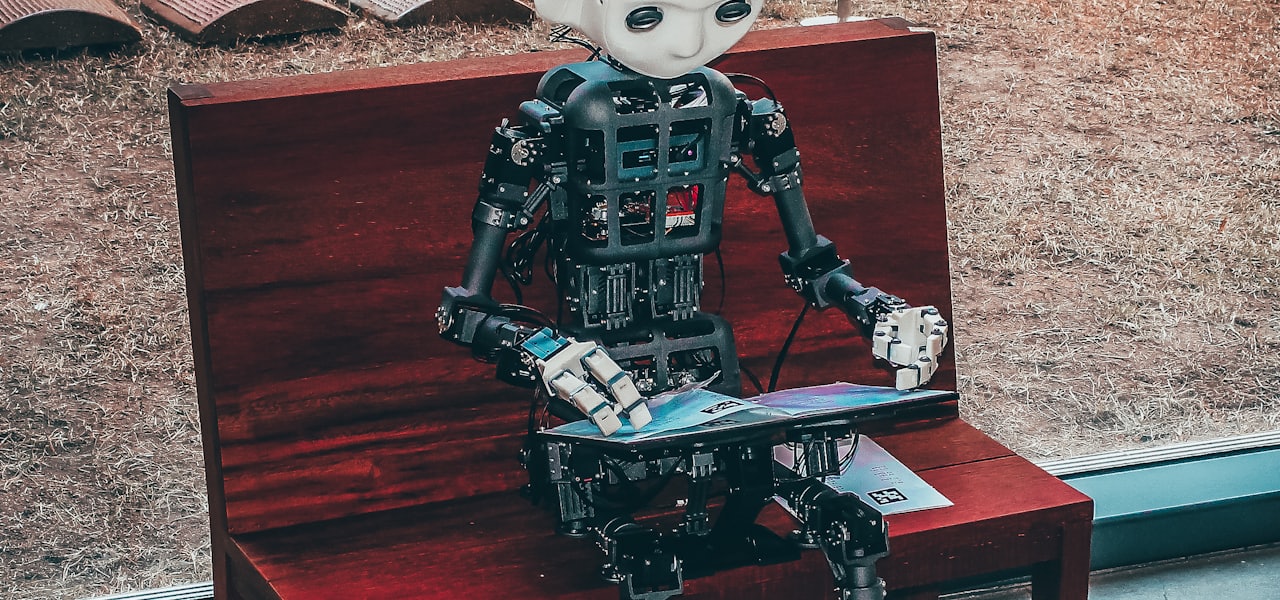
Developmental robotics (DevRob), sometimes called epigenetic robotics, is a scientific field which aims at studying the developmental mechanisms, architectures and constraints that allow lifelong and open-ended learning of new skills and new knowledge in embodied machines. As in human children, learning is expected to be cumulative and of progressively increasing complexity, and to result from self-exploration of the world in combination with social interaction. The typical methodological approach consists in starting from theories of human and animal development elaborated in fields such as developmental psychology, neuroscience, developmental and evolutionary biology, and linguistics, then to formalize and implement them in robots, sometimes exploring extensions or variants of them. The experimentation of those models in robots allows researchers to confront them with reality, and as a consequence, developmental robotics also provides feedback and novel hypotheses on theories of human and animal development. Developmental robotics is related to but differs from evolutionary robotics (ER). ER uses populations of robots that evolve over time, whereas DevRob is interested in how the organization of a single robot's control system develops through experience, over time. DevRob is also related to work done in the domains of robotics and artificial life. == Background == Can a robot learn like a child? Can it learn a variety of new skills and new knowledge unspecified at design time and in a partially unknown and changing environment? How can it discover its body and its relationships with the physical and social environment? How can its cognitive capacities continuously develop without the intervention of an engineer once it is "out of the factory"? What can it learn through natural social interactions with humans? These are the questions at the center of developmental robotics. Alan Turing, as well as a number of other pioneers of cybernetics, already formulated those questions and the general approach in 1950, but it is only since the end of the 20th century that they began to be investigated systematically. Because the concept of adaptive intelligent machines is central to developmental robotics, it has relationships with fields such as artificial intelligence, machine learning, cognitive robotics or computational neuroscience. Yet, while it may reuse some of the techniques elaborated in these fields, it differs from them from many perspectives. It differs from classical artificial intelligence because it does not assume the capability of advanced symbolic reasoning and focuses on embodied and situated sensorimotor and social skills rather than on abstract symbolic problems. It differs from cognitive robotics because it focuses on the processes that allow the formation of cognitive capabilities rather than these capabilities themselves. It differs from computational neuroscience because it focuses on functional modeling of integrated architectures of development and learning. More generally, developmental robotics is uniquely characterized by the following three features: It targets task-independent architectures and learning mechanisms, i.e. the machine/robot has to be able to learn new tasks that are unknown by the engineer; It emphasizes open-ended development and lifelong learning, i.e. the capacity of an organism to acquire continuously novel skills. This should not be understood as a capacity for learning "anything" or even “everything”, but just that the set of skills that is acquired can be infinitely extended at least in some (not all) directions; The complexity of acquired knowledge and skills shall increase (and the increase be controlled) progressively. Developmental robotics emerged at the crossroads of several research communities including embodied artificial intelligence, enactive and dynamical systems cognitive science, connectionism. Starting from the essential idea that learning and development happen as the self-organized result of the dynamical interactions among brains, bodies and their physical and social environment, and trying to understand how this self-organization can be harnessed to provide task-independent lifelong learning of skills of increasing complexity, developmental robotics strongly interacts with fields such as developmental psychology, developmental and cognitive neuroscience, developmental biology (embryology), evolutionary biology, and cognitive linguistics. As many of the theories coming from these sciences are verbal and/or descriptive, this implies a crucial formalization and computational modeling activity in developmental robotics. These computational models are then not only used as ways to explore how to build more versatile and adaptive machines but also as a way to evaluate their coherence and possibly explore alternative explanations for understanding biological development. == Research directions == === Skill domains === Due to the general approach and methodology, developmental robotics projects typically focus on having robots develop the same types of skills as human infants. A first category that is important being investigated is the acquisition of sensorimotor skills. These include the discovery of one's own body, including its structure and dynamics such as hand-eye coordination, locomotion, and interaction with objects as well as tool use, with a particular focus on the discovery and learning of affordances. A second category of skills targeted by developmental robots are social and linguistic skills: the acquisition of simple social behavioural games such as turn-taking, coordinated interaction, lexicons, syntax and grammar, and the grounding of these linguistic skills into sensorimotor skills (sometimes referred as symbol grounding). In parallel, the acquisition of associated cognitive skills are being investigated such as the emergence of the self/non-self distinction, the development of attentional capabilities, of categorization systems and higher-level representations of affordances or social constructs, of the emergence of values, empathy, or theories of mind. === Mechanisms and constraints === The sensorimotor and social spaces in which humans and robot live are so large and complex that only a small part of potentially learnable skills can actually be explored and learnt within a life-time. Thus, mechanisms and constraints are necessary to guide developmental organisms in their development and control of the growth of complexity. There are several important families of these guiding mechanisms and constraints which are studied in developmental robotics, all inspired by human development: Motivational systems, generating internal reward signals that drive exploration and learning, which can be of two main types: extrinsic motivations push robots/organisms to maintain basic specific internal properties such as food and water level, physical integrity, or light (e.g. in phototropic systems); intrinsic motivations push robot to search for novelty, challenge, compression or learning progress per se, thus generating what is sometimes called curiosity-driven learning and exploration, or alternatively active learning and exploration; Social guidance: as humans learn a lot by interacting with their peers, developmental robotics investigates mechanisms that can allow robots to participate to human-like social interaction. By perceiving and interpreting social cues, this may allow robots both to learn from humans (through diverse means such as imitation, emulation, stimulus enhancement, demonstration, etc. ...) and to trigger natural human pedagogy. Thus, social acceptance of developmental robots is also investigated; Statistical inference biases and cumulative knowledge/skill reuse: biases characterizing both representations/encodings and inference mechanisms can typically allow considerable improvement of the efficiency of learning and are thus studied. Related to this, mechanisms allowing to infer new knowledge and acquire new skills by reusing previously learnt structures is also an essential field of study; The properties of embodiment, including geometry, materials, or innate motor primitives/synergies often encoded as dynamical systems, can considerably simplify the acquisition of sensorimotor or social skills, and is sometimes referred as morphological computation. The interaction of these constraints with other constraints is an important axis of investigation; Maturational constraints: In human infants, both the body and the neural system grow progressively, rather than being full-fledged already at birth. This implies, for example, that new degrees of freedom, as well as increases of the volume and resolution of available sensorimotor signals, may appear as learning and development unfold. Transposing these mechanisms in developmental robots, and understanding how it may hinder or on the contrary ease the acquisition of novel complex skills is a central questi
History of machine translation
Machine translation is a sub-field of computational linguistics that investigates the use of software to translate text or speech from one natural language to another. In the 1950s, machine translation became a reality in research, although references to the subject can be found as early as the 17th century. The Georgetown experiment, which involved successful fully automatic translation of more than sixty Russian sentences into English in 1954, was one of the earliest recorded projects. Researchers of the Georgetown experiment asserted their belief that machine translation would be a solved problem within a few years. In the Soviet Union, similar experiments were performed shortly after. Consequently, the success of the experiment ushered in an era of significant funding for machine translation research in the United States. The achieved progress was much slower than expected; in 1966, the ALPAC report found that ten years of research had not fulfilled the expectations of the Georgetown experiment and resulted in dramatically reduced funding. Interest grew in statistical models for machine translation, which became more common and also less expensive in the 1980s as available computational power increased. Although there exists no autonomous system of "fully automatic high quality translation of unrestricted text," there are many programs now available that are capable of providing useful output within strict constraints. Several of these programs are available online, such as Google Translate and the SYSTRAN system that powers AltaVista's BabelFish (which was replaced by Microsoft Bing translator in May 2012). == The beginning == The origins of machine translation can be traced back to the work of Al-Kindi, a 9th-century Arabic cryptographer who developed techniques for systemic language translation, including cryptanalysis, frequency analysis, and probability and statistics, which are used in modern machine translation. The idea of machine translation later appeared in the 17th century. In 1629, René Descartes proposed a universal language, with equivalent ideas in different tongues sharing one symbol. In the mid-1930s the first patents for "translating machines" were applied for by Georges Artsrouni, for an automatic bilingual dictionary using punched tape. Russian Peter Troyanskii submitted a more detailed proposal that included both the bilingual dictionary and a method for dealing with grammatical roles between languages, based on the grammatical system of Esperanto. This system was separated into three stages: stage one consisted of a native-speaking editor in the source language to organize the words into their logical forms and to exercise the syntactic functions; stage two required the machine to "translate" these forms into the target language; and stage three required a native-speaking editor in the target language to normalize this output. Troyanskii's proposal remained unknown until the late 1950s, by which time computers were well-known and utilized. == The early years == The first set of proposals for computer based machine translation was presented in 1949 by Warren Weaver, a researcher at the Rockefeller Foundation, "Translation memorandum". These proposals were based on information theory, successes in code breaking during the Second World War, and theories about the universal principles underlying natural language. A few years after Weaver submitted his proposals, research began in earnest at many universities in the United States. On 7 January 1954 the Georgetown–IBM experiment was held in New York at the head office of IBM. This was the first public demonstration of a machine translation system. The demonstration was widely reported in the newspapers and garnered public interest. The system itself, however, was no more than a "toy" system. It had only 250 words and translated 49 carefully selected Russian sentences into English – mainly in the field of chemistry. Nevertheless, it encouraged the idea that machine translation was imminent and stimulated the financing of the research, not only in the US but worldwide. Early systems used large bilingual dictionaries and hand-coded rules for fixing the word order in the final output which was eventually considered too restrictive in linguistic developments at the time. For example, generative linguistics and transformational grammar were exploited to improve the quality of translations. During this period operational systems were installed. The United States Air Force used a system produced by IBM and Washington University in St. Louis, while the Atomic Energy Commission and Euratom, in Italy, used a system developed at Georgetown University. While the quality of the output was poor it met many of the customers' needs, particularly in terms of speed. At the end of the 1950s, Yehoshua Bar-Hillel was asked by the US government to look into machine translation, to assess the possibility of fully automatic high-quality translation by machines. Bar-Hillel described the problem of semantic ambiguity or double-meaning, as illustrated in the following sentence: Little John was looking for his toy box. Finally he found it. The box was in the pen. The word pen may have two meanings: the first meaning, something used to write in ink with; the second meaning, a container of some kind. To a human, the meaning is obvious, but Bar-Hillel claimed that without a "universal encyclopedia" a machine would never be able to deal with this problem. At the time, this type of semantic ambiguity could only be solved by writing source texts for machine translation in a controlled language that uses a vocabulary in which each word has exactly one meaning. == The 1960s, the ALPAC report and the seventies == Research in the 1960s in both the Soviet Union and the United States concentrated mainly on the Russian–English language pair. The objects of translation were chiefly scientific and technical documents, such as articles from scientific journals. The rough translations produced were sufficient to get a basic understanding of the articles. If an article discussed a subject deemed to be confidential, it was sent to a human translator for a complete translation; if not, it was discarded. A great blow came to machine-translation research in 1966 with the publication of the ALPAC report. The report was commissioned by the US government and delivered by ALPAC, the Automatic Language Processing Advisory Committee, a group of seven scientists convened by the US government in 1964. The US government was concerned that there was a lack of progress being made despite significant expenditure. The report concluded that machine translation was more expensive, less accurate and slower than human translation, and that despite the expenditures, machine translation was not likely to reach the quality of a human translator in the near future. The report recommended, however, that tools be developed to aid translators – automatic dictionaries, for example – and that some research in computational linguistics should continue to be supported. The publication of the report had a profound impact on research into machine translation in the United States, and to a lesser extent the Soviet Union and United Kingdom. Research, at least in the US, was almost completely abandoned for over a decade. In Canada, France and Germany, however, research continued. In the US the main exceptions were the founders of SYSTRAN (Peter Toma) and Logos (Bernard Scott), who established their companies in 1968 and 1970 respectively and served the US Department of Defense. In 1970, the SYSTRAN system was installed for the United States Air Force, and subsequently by the Commission of the European Communities in 1976. The METEO System, developed at the Université de Montréal, was installed in Canada in 1977 to translate weather forecasts from English to French, and was translating close to 80,000 words per day or 30 million words per year until it was replaced by a competitor's system on 30 September 2001. While research in the 1960s concentrated on limited language pairs and input, demand in the 1970s was for low-cost systems that could translate a range of technical and commercial documents. This demand was spurred by the increase of globalisation and the demand for translation in Canada, Europe, and Japan. == The 1980s and early 1990s == By the 1980s, both the diversity and the number of installed systems for machine translation had increased. A number of systems relying on mainframe technology were in use, such as SYSTRAN, Logos, Ariane-G5, and Metal. As a result of the improved availability of microcomputers, there was a market for lower-end machine translation systems. Many companies took advantage of this in Europe, Japan, and the USA. Systems were also brought onto the market in China, Eastern Europe, Korea, and the Soviet Union. During the 1980s there was a lot of activity in MT in Japan especially. With the fifth-generation co